
Voronoi's VRN11 Demonstrates Efficacy at Low Dose in EGFR C797S Non-Small Cell Lung Cancer Patient with Brain Metastases
2025.04.28
■ Targeting global accelerated approval in 2026
■ Early Phase 1 data confirm efficacy at a low dose (40 mg) in an EGFR C797S mutation patient with brain metastases
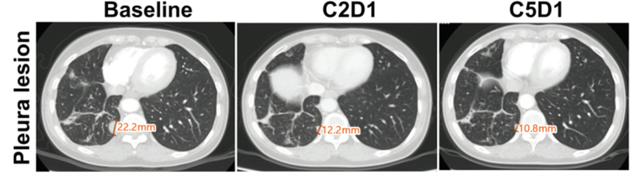
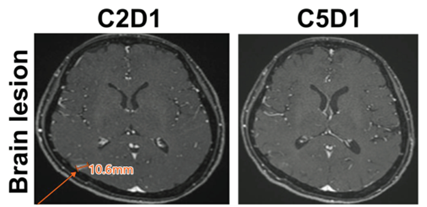
■ Clinical data released showing over 50% tumor shrinkage in the lung and complete disappearance in the brain
Voronoi has demonstrated efficacy in patients with the EGFR C797S mutation through early clinical data on VRN11, its EGFR non-small cell lung cancer targeted therapy, released at the American Association for Cancer Research Annual Meeting (AACR 2025).
At AACR 2025, Voronoi disclosed that during the ongoing Phase 1a dose-escalation stage, a patient with an EGFR C797S double mutation (EGFR L858R/C797S) and brain metastases who received the low dose of 40 mg showed a partial response of more than 50% in the lung lesion and a complete response in the brain lesion, without side effects.
Specifically, a 22.2 mm tumor in the lung shrank by more than 50% after two months of dosing, and a 10.6 mm lesion in the brain was confirmed to have completely disappeared after four months.
VRN11 is currently about to be dosed at 240 mg, and the trial is designed to escalate up to 320 mg, eight times the 40 mg dose at which efficacy was confirmed, so the antitumor effect is expected to increase further as the dose increases.
Source: AACR 2025
Source: AACR 2025
Among VRN11's targets, the EGFR C797S mutation is an acquired resistance double mutation that arises when third-generation non-small cell lung cancer therapies, including Tagrisso and Leclaza, are administered to patients with primary cancer mutations (EGFR Del19 or L858R), with an incidence of around 10%. The market for C797S non-small cell lung cancer therapies can be estimated at around KRW 1 trillion per year.
There is currently no approved targeted therapy that can be administered to patients with the C797S mutation, and the combination of Alimta (pemetrexed) and platinum-based cytotoxic chemotherapy used as the existing second-line treatment for non-small cell lung cancer has a progression-free survival (PFS) of 4 months and a Grade 3 or higher adverse event rate of around 50%, so an unmet medical need is known to exist for second-line treatment of non-small cell lung cancer.
A leading competitor was Blueprint Medicines, a NASDAQ-listed U.S. company, but it failed to demonstrate efficacy in patients with the EGFR C797S mutation.
Voronoi stated that it plans to release additional data on EGFR mutation non-small cell lung cancer patients obtained from the ongoing clinical trial at an international conference in July of this year.
According to a Voronoi representative, "The company's Scientific Advisory Board (SAB) and clinical consultants, composed of lung cancer/solid tumor specialists, highly praised the efficacy and safety of VRN11, and strongly recommended that, judging from the data revealed so far, the company pursue aggressive clinical development targeting accelerated approval as a therapy for EGFR C797S mutation non-small cell lung cancer, given its high single-agent antitumor effect and safety margin." The representative added with confidence, "Accordingly, we will conduct a Phase 2 clinical trial for accelerated approval in 2026, and through this we aim to obtain accelerated approval quickly, including in the U.S. and Europe."
▣ Contact
E-mail: ir@voronoi.io
■ Early Phase 1 data confirm efficacy at a low dose (40 mg) in an EGFR C797S mutation patient with brain metastases
■ Clinical data released showing over 50% tumor shrinkage in the lung and complete disappearance in the brain
Voronoi has demonstrated efficacy in patients with the EGFR C797S mutation through early clinical data on VRN11, its EGFR non-small cell lung cancer targeted therapy, released at the American Association for Cancer Research Annual Meeting (AACR 2025).
At AACR 2025, Voronoi disclosed that during the ongoing Phase 1a dose-escalation stage, a patient with an EGFR C797S double mutation (EGFR L858R/C797S) and brain metastases who received the low dose of 40 mg showed a partial response of more than 50% in the lung lesion and a complete response in the brain lesion, without side effects.
Specifically, a 22.2 mm tumor in the lung shrank by more than 50% after two months of dosing, and a 10.6 mm lesion in the brain was confirmed to have completely disappeared after four months.
VRN11 is currently about to be dosed at 240 mg, and the trial is designed to escalate up to 320 mg, eight times the 40 mg dose at which efficacy was confirmed, so the antitumor effect is expected to increase further as the dose increases.
Source: AACR 2025
Source: AACR 2025
Among VRN11's targets, the EGFR C797S mutation is an acquired resistance double mutation that arises when third-generation non-small cell lung cancer therapies, including Tagrisso and Leclaza, are administered to patients with primary cancer mutations (EGFR Del19 or L858R), with an incidence of around 10%. The market for C797S non-small cell lung cancer therapies can be estimated at around KRW 1 trillion per year.
There is currently no approved targeted therapy that can be administered to patients with the C797S mutation, and the combination of Alimta (pemetrexed) and platinum-based cytotoxic chemotherapy used as the existing second-line treatment for non-small cell lung cancer has a progression-free survival (PFS) of 4 months and a Grade 3 or higher adverse event rate of around 50%, so an unmet medical need is known to exist for second-line treatment of non-small cell lung cancer.
A leading competitor was Blueprint Medicines, a NASDAQ-listed U.S. company, but it failed to demonstrate efficacy in patients with the EGFR C797S mutation.
Voronoi stated that it plans to release additional data on EGFR mutation non-small cell lung cancer patients obtained from the ongoing clinical trial at an international conference in July of this year.
According to a Voronoi representative, "The company's Scientific Advisory Board (SAB) and clinical consultants, composed of lung cancer/solid tumor specialists, highly praised the efficacy and safety of VRN11, and strongly recommended that, judging from the data revealed so far, the company pursue aggressive clinical development targeting accelerated approval as a therapy for EGFR C797S mutation non-small cell lung cancer, given its high single-agent antitumor effect and safety margin." The representative added with confidence, "Accordingly, we will conduct a Phase 2 clinical trial for accelerated approval in 2026, and through this we aim to obtain accelerated approval quickly, including in the U.S. and Europe."
▣ Contact
E-mail: ir@voronoi.io