
Voronoi's VRN11 Confirms Differentiated Antitumor Effect in C797S Patients and Patients with Brain Metastases
2026.09.15
■ Objective response rate (ORR) of 100% and progression-free survival (PFS) of 11 months in C797S patients
■ Intracranial complete response (iCR) of 21% and intracranial disease control rate (iDCR) of 100% in patients with brain metastases
■ Grade 3 or higher adverse events 3%, permanent discontinuation due to drug-related adverse events 0%
Voronoi (310210) announced on the 15th that it has presented the Phase 1 results of VRN11, its next-generation EGFR targeted therapy, in a Mini Oral session at the World Conference on Lung Cancer (WCLC 2026), held in Seoul.
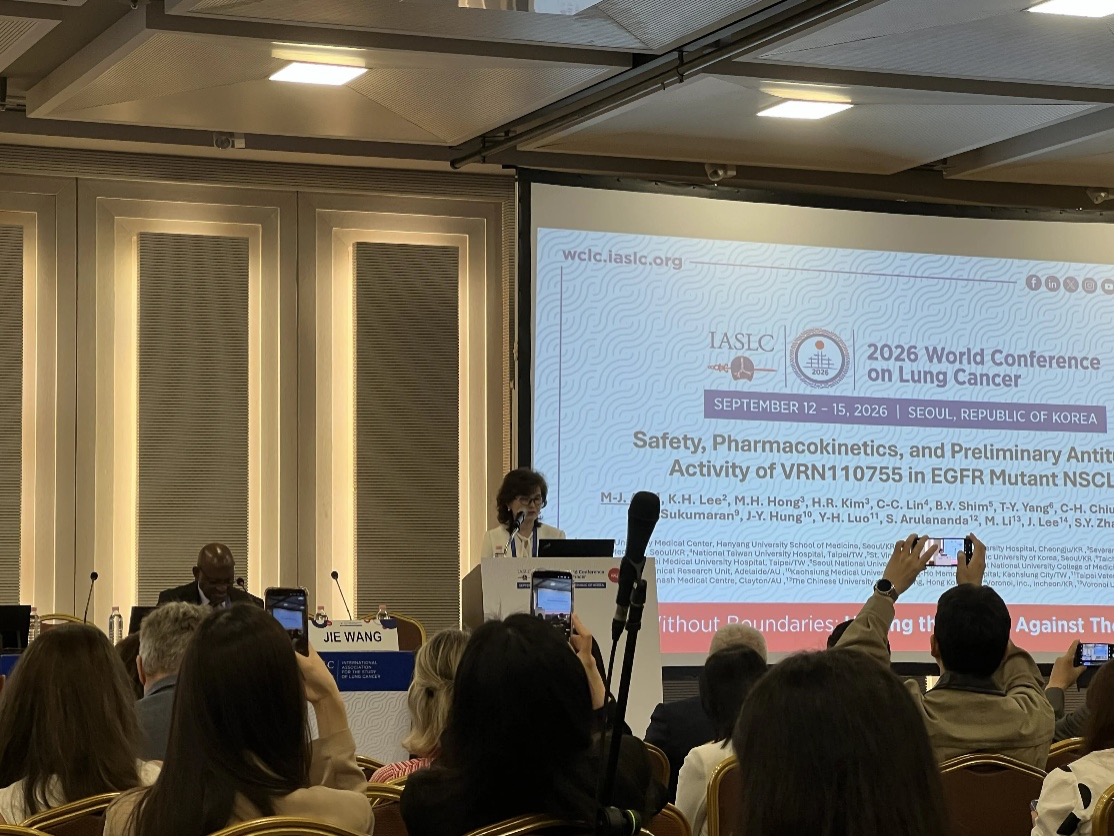
The presentation was given by Professor Myung-Ju Ahn, Chair of WCLC 2026. Professor Ahn disclosed the antitumor efficacy and safety results of VRN11 confirmed in patients with EGFR C797S, the representative resistance mutation that arises after treatment with the third-generation EGFR inhibitor osimertinib (brand name Tagrisso), and in patients with brain metastases.
[C797S patients: ORR 100% and PFS 11 months at 160 mg or higher]
According to the presentation, VRN11 showed an ORR of 100%, with an objective response observed in all 6 patients with a confirmed C797S mutation who received 160 mg or higher. In addition, a median progression-free survival (PFS) of 11 months was confirmed in the C797S patient group, demonstrating a long-term disease-suppressing effect along with a high response rate.
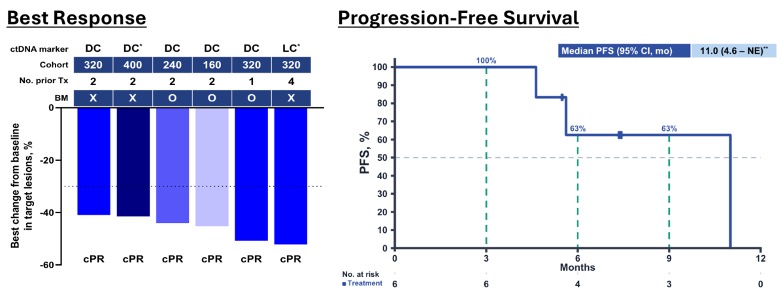
WCLC 2026, objective response rate and progression-free survival of VRN11 in patients with the C797S mutation
[iDCR 100% and iCR 21% in patients with brain metastases]
Intracranial disease control was confirmed in all 19 evaluable patients who developed brain metastases after existing standard therapies including third-generation therapies, recording an intracranial disease control rate (iDCR) of 100%. Among them, 4 patients showed intracranial complete response (iCR), with complete disappearance of brain lesions, for an intracranial complete response rate of 21%.
In particular, the median intracranial progression-free survival (iPFS) in patients with brain metastases had not been reached even at the 9-month mark, showing that VRN11 effectively crosses the blood-brain barrier and suppresses central nervous system (CNS) tumors over the long term.
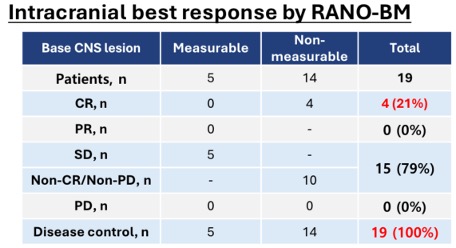
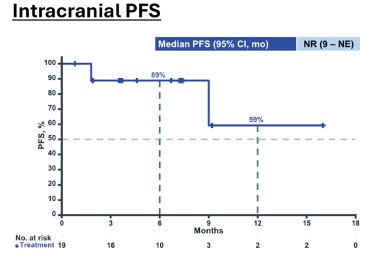
WCLC 2026, intracranial response rate and intracranial progression-free survival of VRN11 in patients with brain metastases
[Addressing the unmet need of patients with brain metastases after osimertinib treatment]
Brain metastases occur at a high frequency in EGFR mutation non-small cell lung cancer, and in particular, when brain metastases develop after osimertinib treatment, it is cited as an area of great unmet need due to the absence of treatment options.
Under the current NCCN (National Comprehensive Cancer Network) guidelines, for patients whose brain metastases have progressed after osimertinib treatment, there is no effective treatment option other than maintaining the existing drug in combination with radiotherapy (stereotactic radiosurgery (SRS), whole-brain radiotherapy (WBRT)) or surgery.
The fact that VRN11 showed intracranial complete responses and long-term disease suppression in patients whose brain metastases had progressed after prior treatment supports its potential as a new treatment option.
[Drug-related discontinuation 0%, Grade 3 or higher adverse events 3%]
Differentiated results continued in terms of safety as well. There were zero cases of permanent treatment discontinuation due to drug-related adverse events, and the incidence of Grade 3 or higher drug-related adverse events was 3%. VRN11 is demonstrating a safety profile suited to long-term administration along with a high antitumor effect.
[Competitive advantage in C797S confirmed through efficacy and safety]
According to the company, while competing C797S-targeting drugs currently in development show limited response rates and relatively high rates of serious adverse events, VRN11 has secured competitive clinical results in terms of both efficacy and safety. The high ORR and median PFS of 11 months confirmed in the C797S patient group, the high therapeutic effect in patients with brain metastases, and the low adverse event rate demonstrate VRN11's clear competitive advantage.
[Expanding clinical development as a global first-line treatment]
Based on this potent antitumor effect and safety, Voronoi is expanding the scope of development to a first-line treatment clinical trial in treatment-naïve patients with EGFR mutation non-small cell lung cancer. It has currently obtained first-line treatment clinical trial approvals in Australia, Hong Kong, Singapore, Malaysia, and Thailand and is accelerating development.
A Voronoi representative said, "It is highly meaningful that Professor Myung-Ju Ahn, the conference chair, presented the clinical results of VRN11 in a Mini Oral session at WCLC, attended by the world's leading authorities in the lung cancer field. Having confirmed a high response rate, a long-term disease-suppressing effect, and favorable safety in patients who developed C797S resistance or progressed with brain metastases after osimertinib treatment, we will continue to demonstrate VRN11's competitiveness in more concrete terms through follow-on clinical trials."
■ Intracranial complete response (iCR) of 21% and intracranial disease control rate (iDCR) of 100% in patients with brain metastases
■ Grade 3 or higher adverse events 3%, permanent discontinuation due to drug-related adverse events 0%
Voronoi (310210) announced on the 15th that it has presented the Phase 1 results of VRN11, its next-generation EGFR targeted therapy, in a Mini Oral session at the World Conference on Lung Cancer (WCLC 2026), held in Seoul.
The presentation was given by Professor Myung-Ju Ahn, Chair of WCLC 2026. Professor Ahn disclosed the antitumor efficacy and safety results of VRN11 confirmed in patients with EGFR C797S, the representative resistance mutation that arises after treatment with the third-generation EGFR inhibitor osimertinib (brand name Tagrisso), and in patients with brain metastases.
[C797S patients: ORR 100% and PFS 11 months at 160 mg or higher]
According to the presentation, VRN11 showed an ORR of 100%, with an objective response observed in all 6 patients with a confirmed C797S mutation who received 160 mg or higher. In addition, a median progression-free survival (PFS) of 11 months was confirmed in the C797S patient group, demonstrating a long-term disease-suppressing effect along with a high response rate.
WCLC 2026, objective response rate and progression-free survival of VRN11 in patients with the C797S mutation
[iDCR 100% and iCR 21% in patients with brain metastases]
Intracranial disease control was confirmed in all 19 evaluable patients who developed brain metastases after existing standard therapies including third-generation therapies, recording an intracranial disease control rate (iDCR) of 100%. Among them, 4 patients showed intracranial complete response (iCR), with complete disappearance of brain lesions, for an intracranial complete response rate of 21%.
In particular, the median intracranial progression-free survival (iPFS) in patients with brain metastases had not been reached even at the 9-month mark, showing that VRN11 effectively crosses the blood-brain barrier and suppresses central nervous system (CNS) tumors over the long term.
WCLC 2026, intracranial response rate and intracranial progression-free survival of VRN11 in patients with brain metastases
[Addressing the unmet need of patients with brain metastases after osimertinib treatment]
Brain metastases occur at a high frequency in EGFR mutation non-small cell lung cancer, and in particular, when brain metastases develop after osimertinib treatment, it is cited as an area of great unmet need due to the absence of treatment options.
Under the current NCCN (National Comprehensive Cancer Network) guidelines, for patients whose brain metastases have progressed after osimertinib treatment, there is no effective treatment option other than maintaining the existing drug in combination with radiotherapy (stereotactic radiosurgery (SRS), whole-brain radiotherapy (WBRT)) or surgery.
The fact that VRN11 showed intracranial complete responses and long-term disease suppression in patients whose brain metastases had progressed after prior treatment supports its potential as a new treatment option.
[Drug-related discontinuation 0%, Grade 3 or higher adverse events 3%]
Differentiated results continued in terms of safety as well. There were zero cases of permanent treatment discontinuation due to drug-related adverse events, and the incidence of Grade 3 or higher drug-related adverse events was 3%. VRN11 is demonstrating a safety profile suited to long-term administration along with a high antitumor effect.
[Competitive advantage in C797S confirmed through efficacy and safety]
According to the company, while competing C797S-targeting drugs currently in development show limited response rates and relatively high rates of serious adverse events, VRN11 has secured competitive clinical results in terms of both efficacy and safety. The high ORR and median PFS of 11 months confirmed in the C797S patient group, the high therapeutic effect in patients with brain metastases, and the low adverse event rate demonstrate VRN11's clear competitive advantage.
[Expanding clinical development as a global first-line treatment]
Based on this potent antitumor effect and safety, Voronoi is expanding the scope of development to a first-line treatment clinical trial in treatment-naïve patients with EGFR mutation non-small cell lung cancer. It has currently obtained first-line treatment clinical trial approvals in Australia, Hong Kong, Singapore, Malaysia, and Thailand and is accelerating development.
A Voronoi representative said, "It is highly meaningful that Professor Myung-Ju Ahn, the conference chair, presented the clinical results of VRN11 in a Mini Oral session at WCLC, attended by the world's leading authorities in the lung cancer field. Having confirmed a high response rate, a long-term disease-suppressing effect, and favorable safety in patients who developed C797S resistance or progressed with brain metastases after osimertinib treatment, we will continue to demonstrate VRN11's competitiveness in more concrete terms through follow-on clinical trials."